Autism
… Respect and Acceptance
Welcome to the Explainer Section of our website! Here, you’ll find a collection of short and engaging explanations designed to help people with disabilities reduce the emotional labor of self-advocacy.
Identity First Language (IDL)
The Autistic community prefers IDL, or “Identity First Language.”
Capitalization
Official grammar rules require that diseases, disorders, and other medical conditions be lowercase, unless they are referring to the name of a person. However, IDL capitalizes Autism because it is a proper noun referring to a marginalized group.
Ordering
Notice how the identity is capitalized and prioritized.
| Identity First Language (IDL) | Person First Language (PFL) |
|---|---|
| Autistic person | Person with autism |
We also use IDL from other marginalized communities. It just sounds… like autism is less of a “revolting” and unpleasant “disease”.
| Identity First Language (IDL) | Person First Language (PFL) |
|---|---|
| A Black person | A person with blackness |
IDL is about accepting a part of who someone is. For the Autistic community, being Autistic is an important part of who we are. If you accept and respect us as people, you must also accept and respect our Autism.
Respectful vs. Problematic
Some things which are offensive to Aspies are hidden in plain sight. Learn how to spot them, and understand why it matters.
Symbols

Organizations
The fact is that Autism Speaks is not run by people who have Autism. They have invested a great deal of donation money into research to prevent Autistic births and dampen Autistic traits, but they have not been known for emphasizing supports which are most helpful for people with Autism. Organizations like the Autistic Self Advocacy Network (ASAN) or National Autistic Society (NAS) in the UK are simply better organizations.
Unlearning
… Micro-Aggressive Behaviours and Stereotypes
This section is dedicated to understanding the micro-aggressive behaviours and stereotypes associated with Autism.
Acceptance, Not Awareness
Please donate to another organization run by someone with Autism.

Our CEO used to have red hair too! When Aspies love a color… we really commit to it. She was the only one of her kind in the economics department!

“High Functioning”
“High functioning” and “low functioning” are harmful categories that we would prefer you avoid using because they are rude. We also genuinely want to help you understand why these approaches to understanding Autism are rude.


In this case, “high functioning” means “looks normal” to a neurotypical, which is not the point of inclusion. We need to respect all individuals, regardless of whether they look like us or not.


TLDR

“I’m not ableist, I just…”


Seriously, how did we develop the reputation for social ineptitude?
When a person with disabilities reaches their limit to tolerating ableism, we typically focus on taking action against their emotional response rather than our role in causing it. This is called strategic ignorance.
Reframe
Many people have a negativity bias towards normal, healthy Autistic traits. Respecting Autistic people means accepting and unlearning harmful mentalities.

Reframe Symptoms as Traits
The picture you have of Autism is likely based in stereotypes rather than reality. Here are some things we want you to know so that you can understand who we are better. We are not as cryptic and complicated as one may assume!

“Inflexible Behaviour”
Neurotypical perception is different from Autistic perception. We may feel uncomfortable about certain things which are considered normal. Our feelings and boundaries are valid, even if you cannot understand them:


“Cannot Make Eye Contact”
Autistic people’s physical brain lights up under a brain scan when we make eye contact. We are physically being overstimulated, and it can be very uncomfortable and overwhelming to experience.

“Repetitive Behaviours”
Listening to the same song on repeat never hurt anyone! It’s just a trait.

“Difficulty” With Tone

Masking Autism
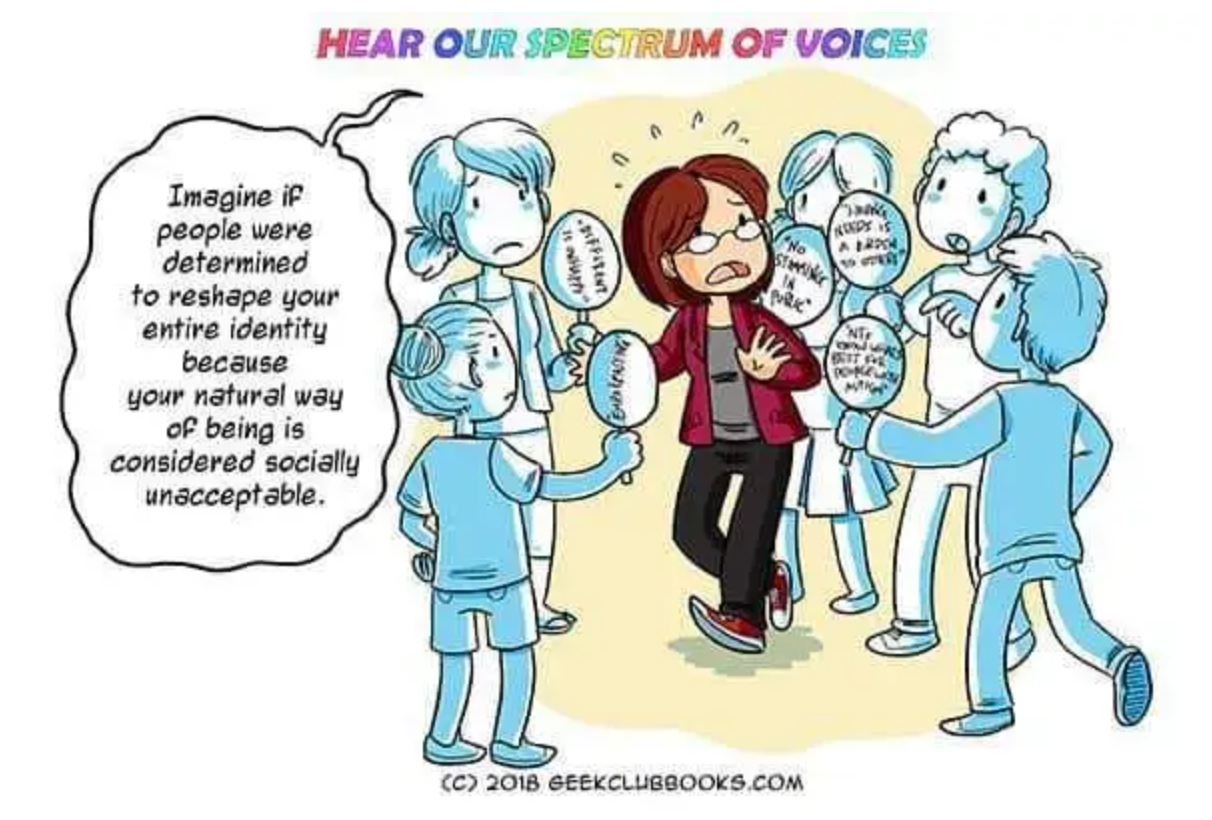
Autistic Meta-Communication (Conflict Situations)
- Conflict and meta-communication.
ABA “Therapy”
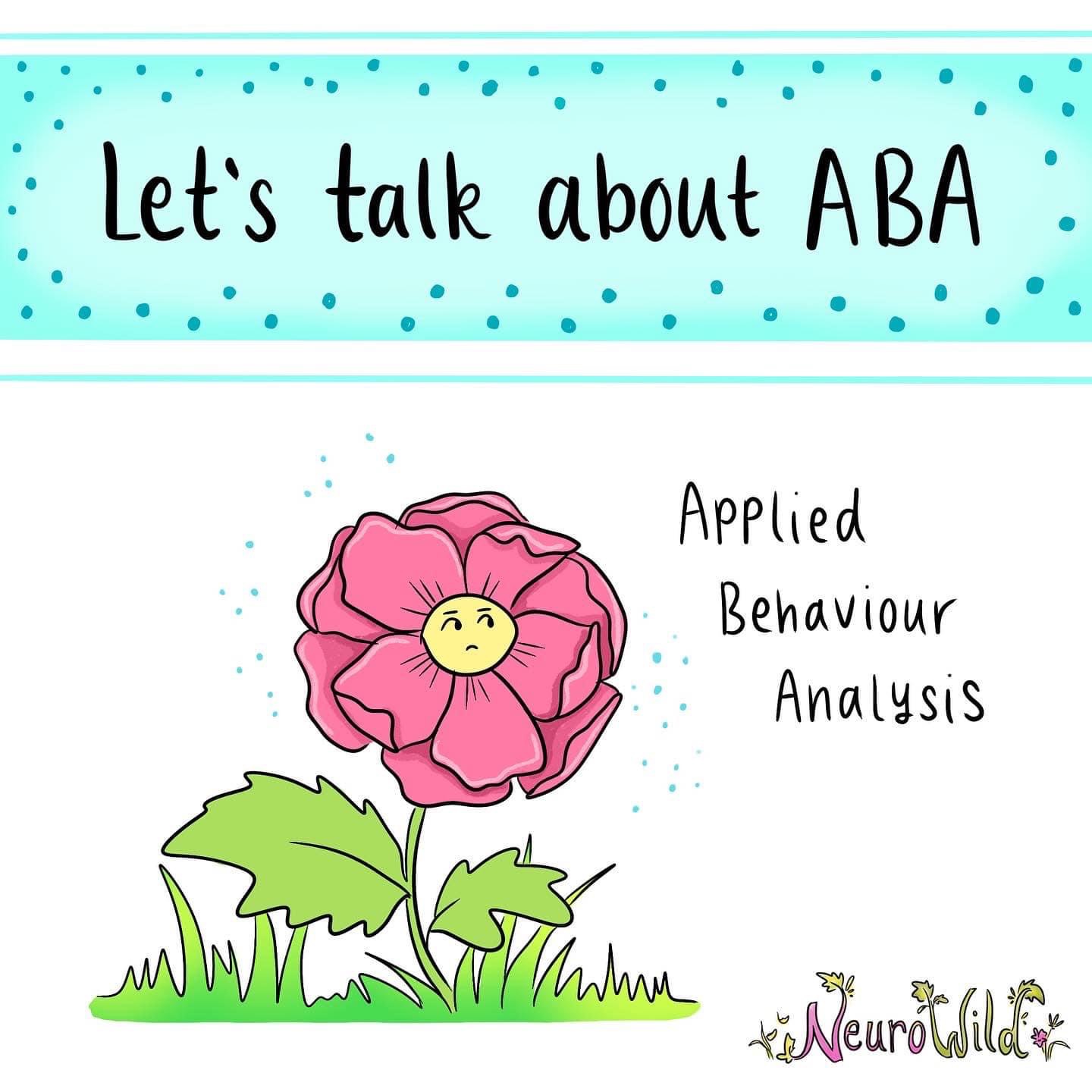
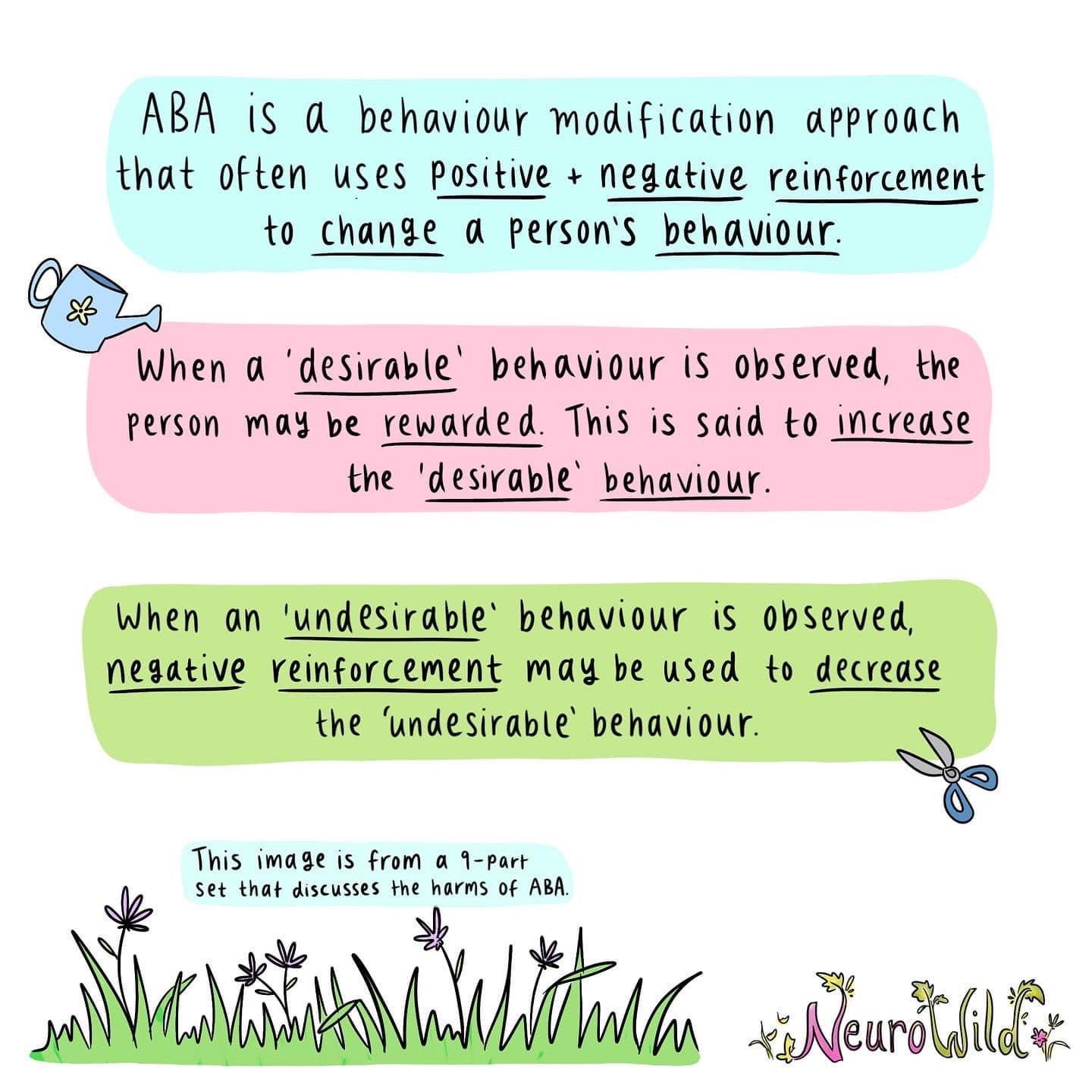
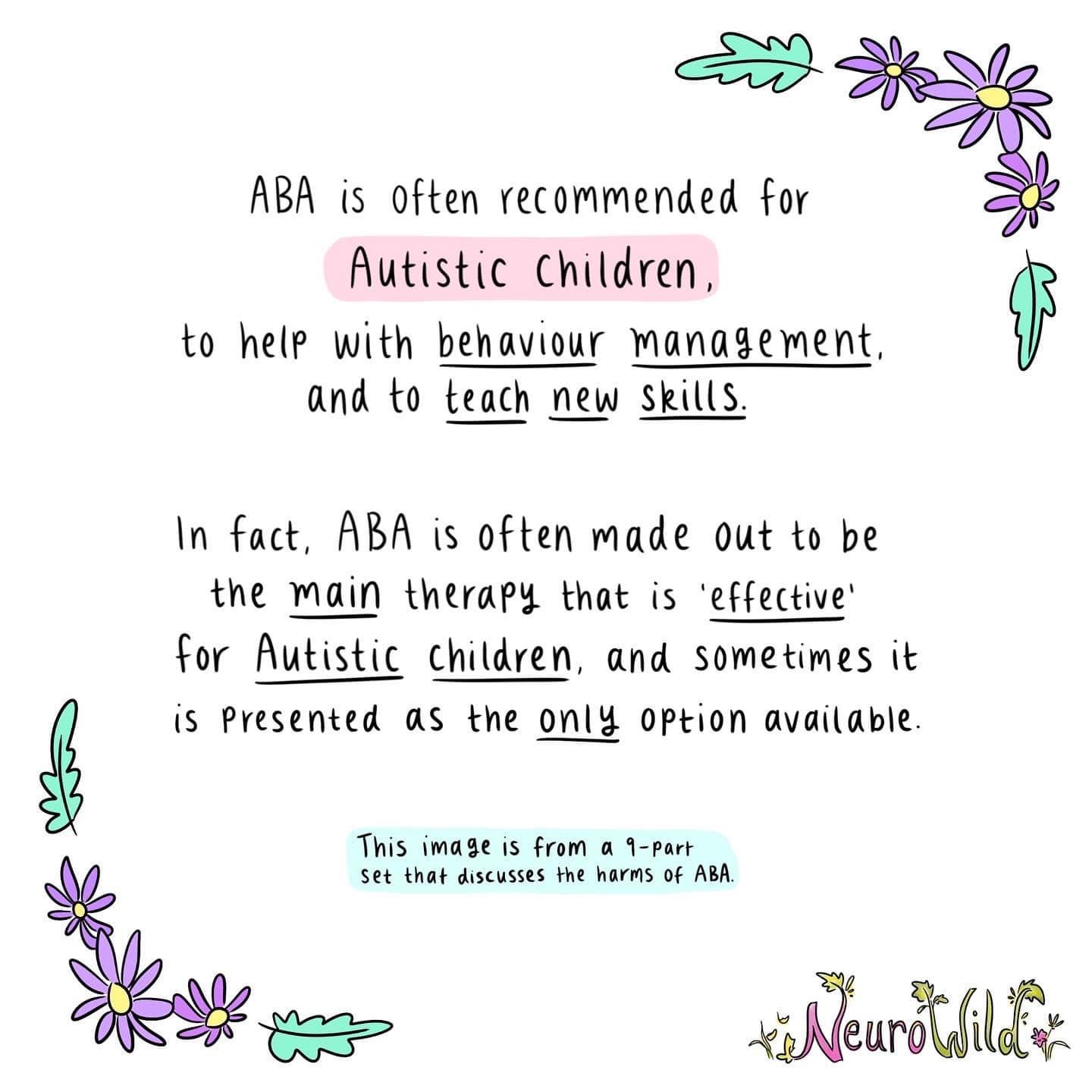
- ABA is typically the main recommendation for sourcing support when Autistic adults are first diagnosed. ABA is by far the most common type of “Autism specialist” out there.
- Therapists with an Autism specialty also tend to be less affordable.
- When Autistic adults seek therapy elsewhere for depression, or even PTSD, a therapist is allowed and even encouraged to decline care to an Autistic person because they are not an Autism “specialist.”
- An Autistic person is likely to have comorbidities, like ADHD.
- Someone with these two diagnoses reaching out to an ADHD specialist, as an example, can be turned down by that ADHD specialist because they are not also specialized in Autism.
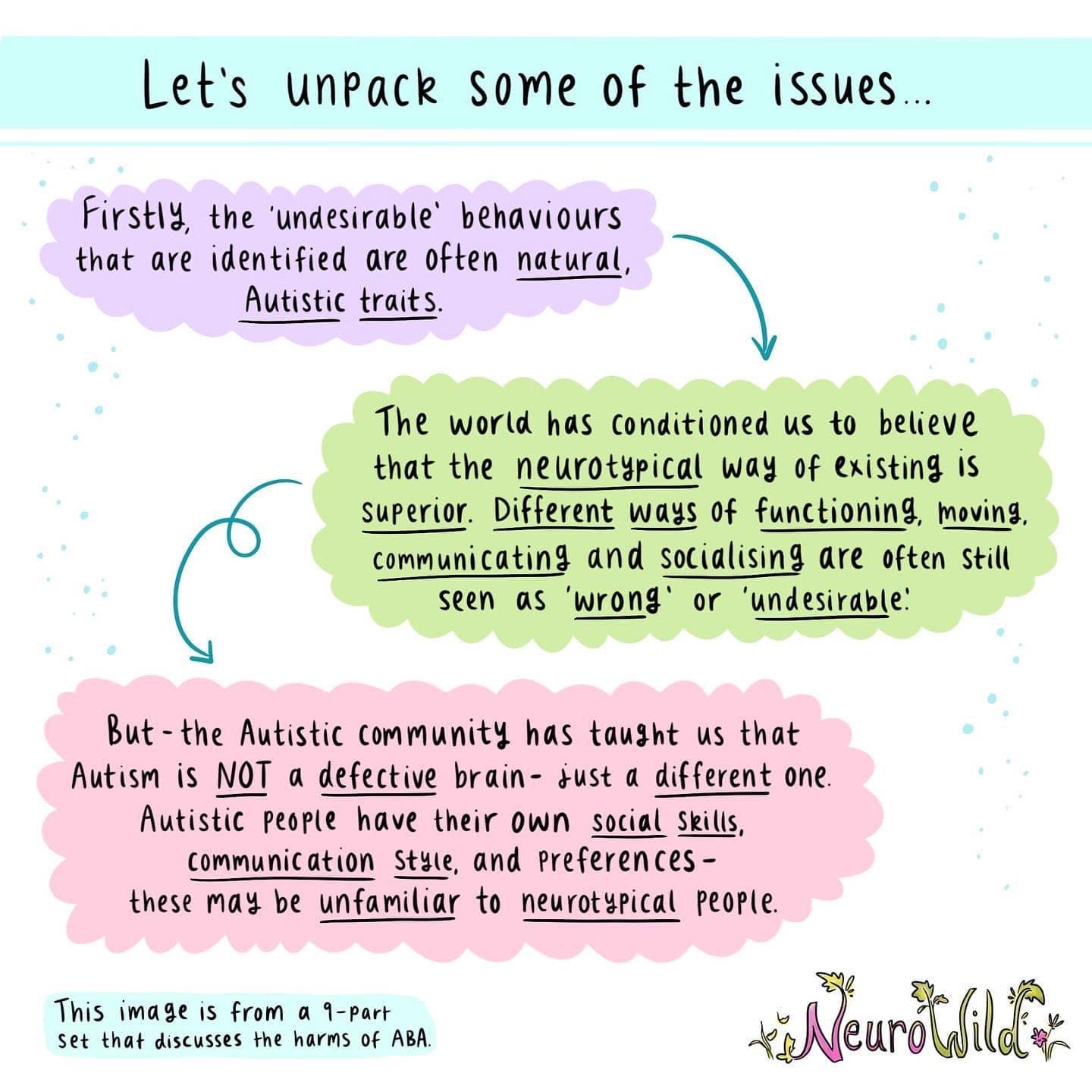
Most therapy strategies are a product of the researchers’ demographics, which means therapists with clients from marginalized groups often have to work with them to adapt primarily White, cis, upper-class contexts to their patient.
- Unfortunately, the fact that Autism is not treated as a valid minority category worth learning about means that therapists can shut down their client for advocating for themselves in therapy and say “I am not trained to deal with your Autism.”
- … rather than being curious about how to support and working with the human being in front of them to adapt strategies to a neurominority.
- Despite having a license in psychology, therapists are not required to have a basic understanding of neurodivergence.
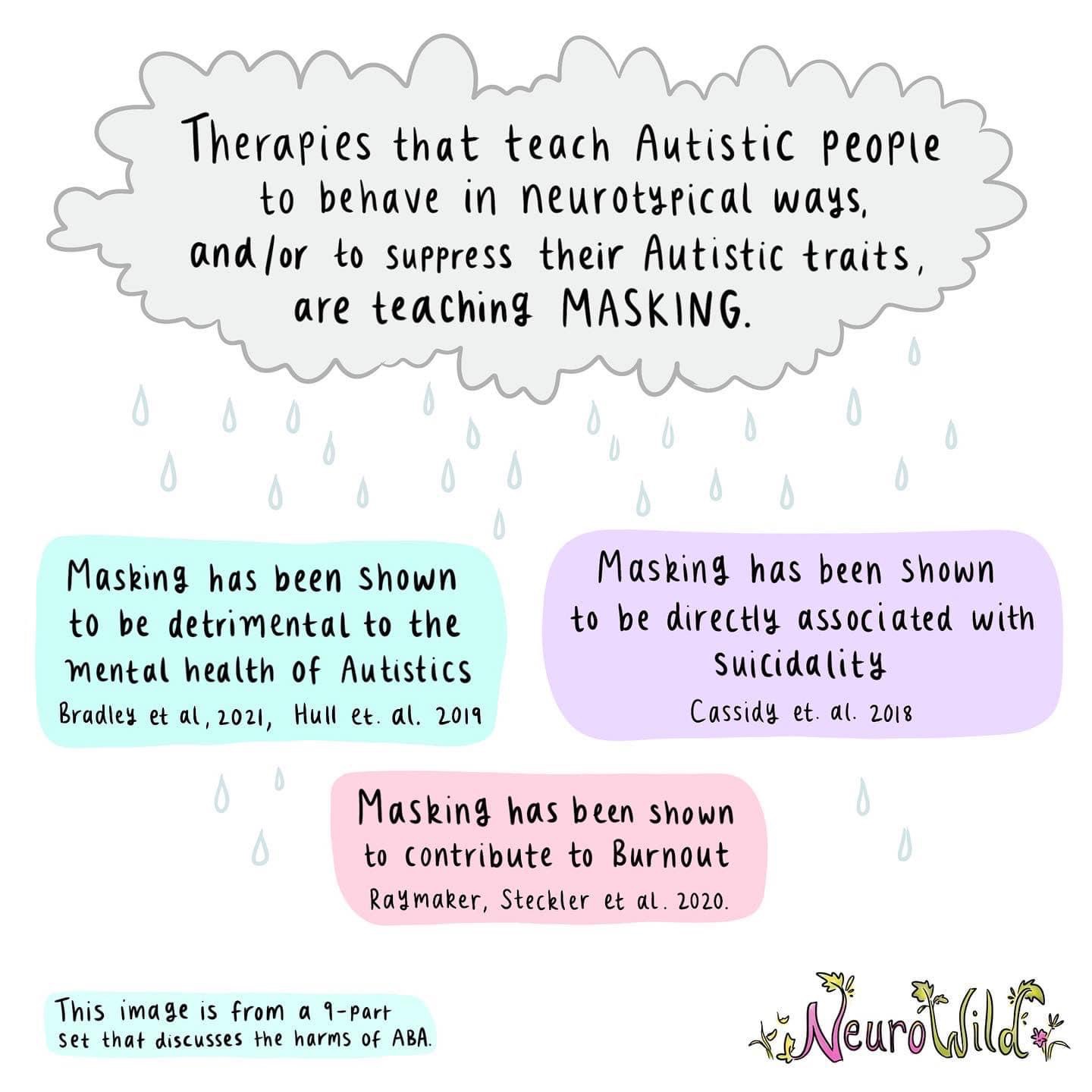
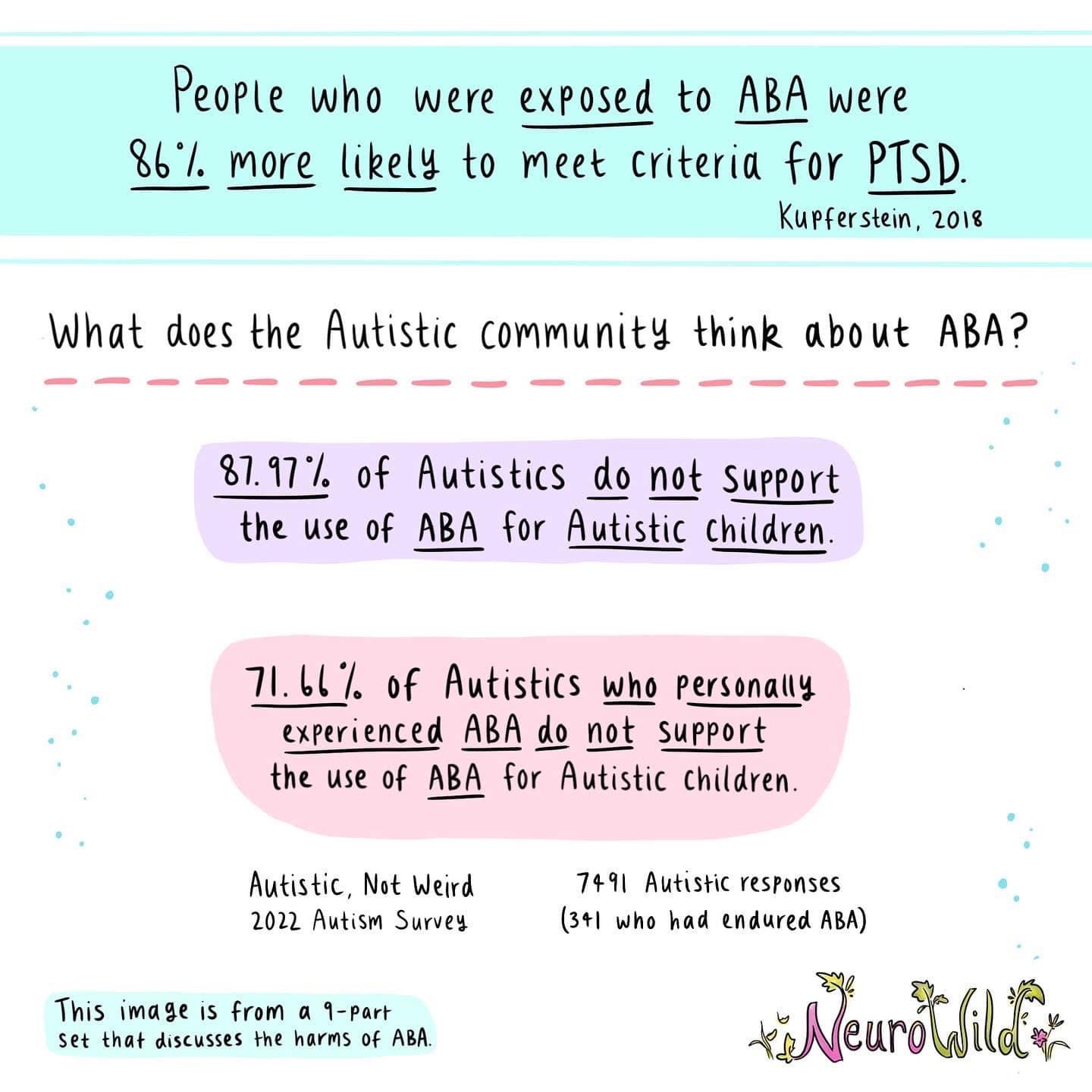
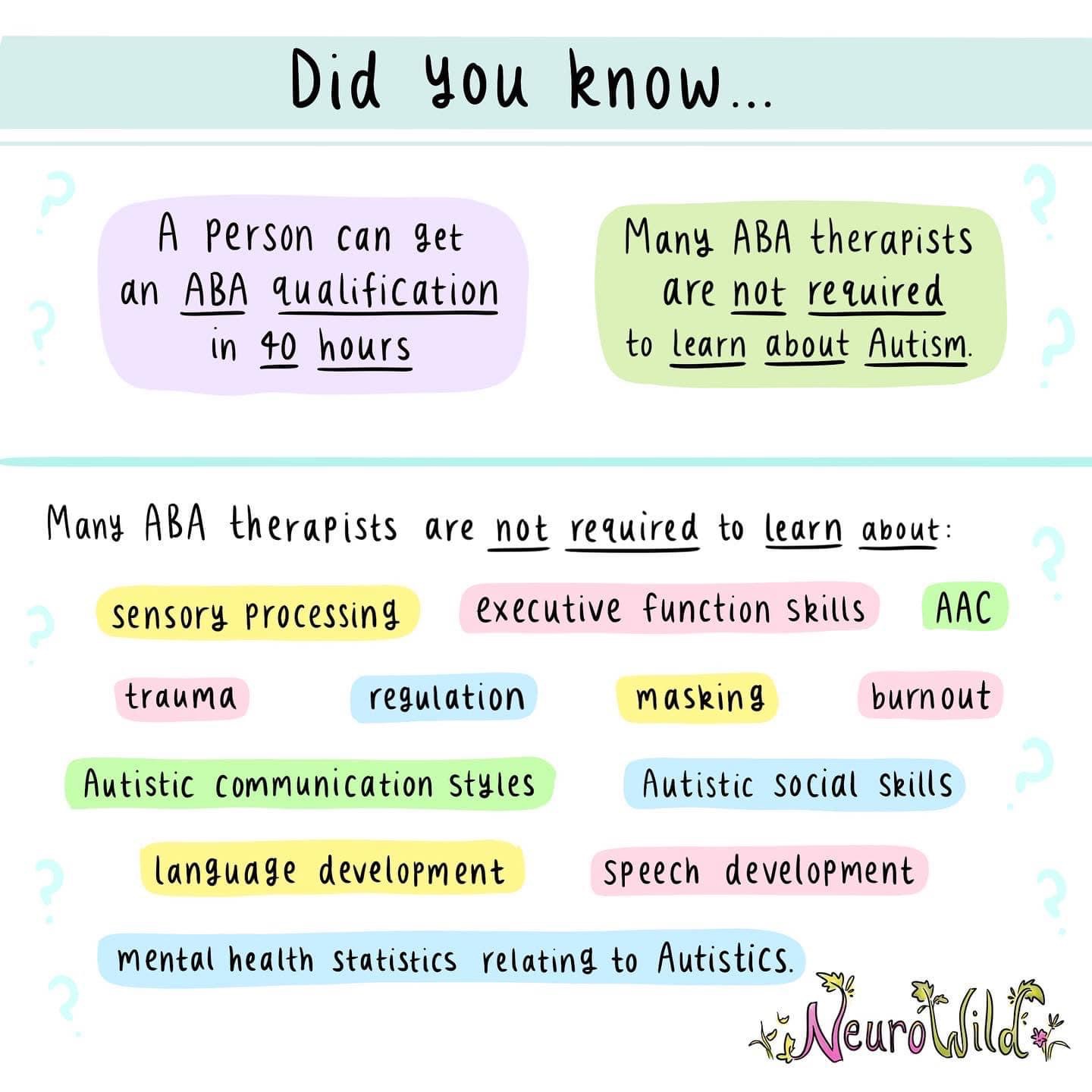
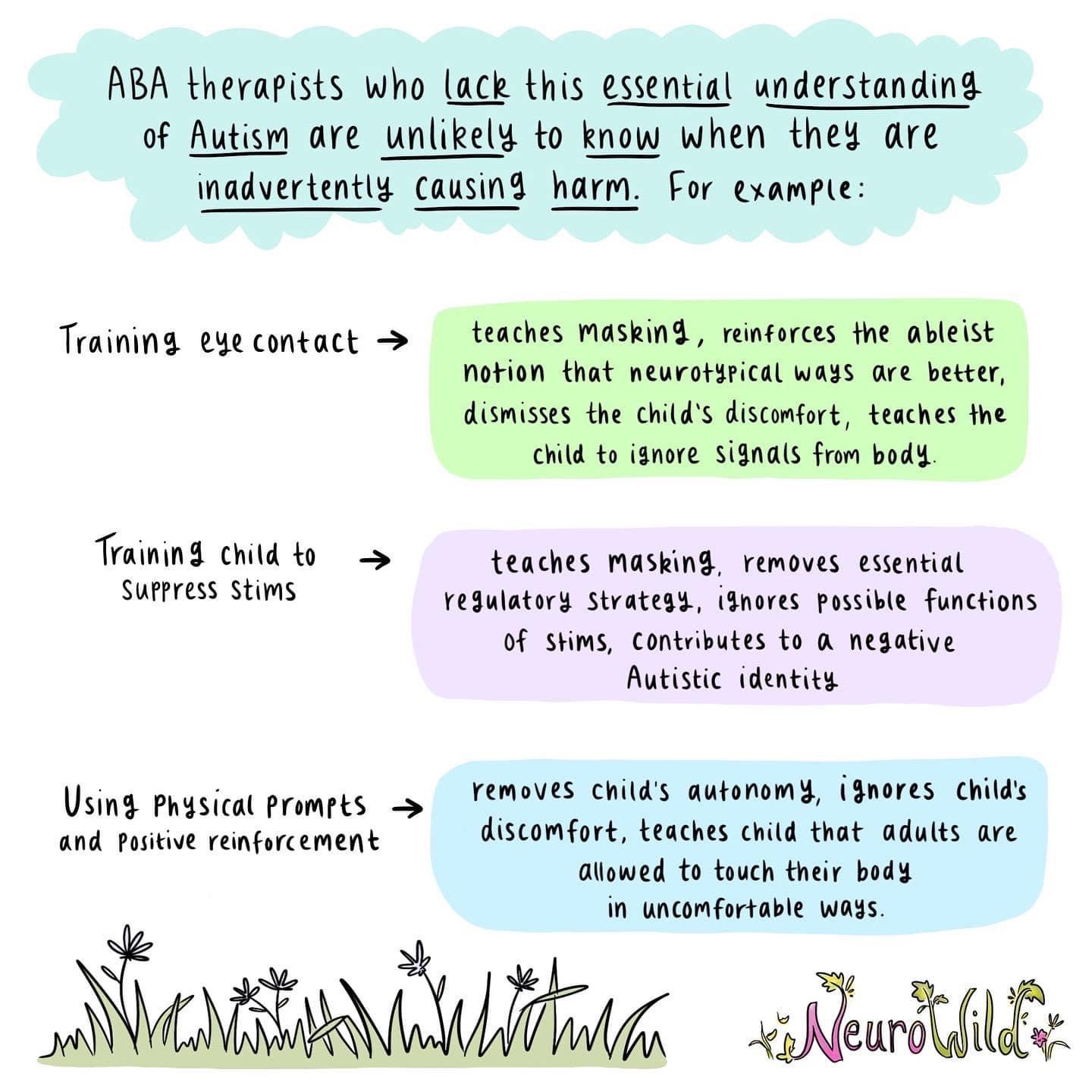
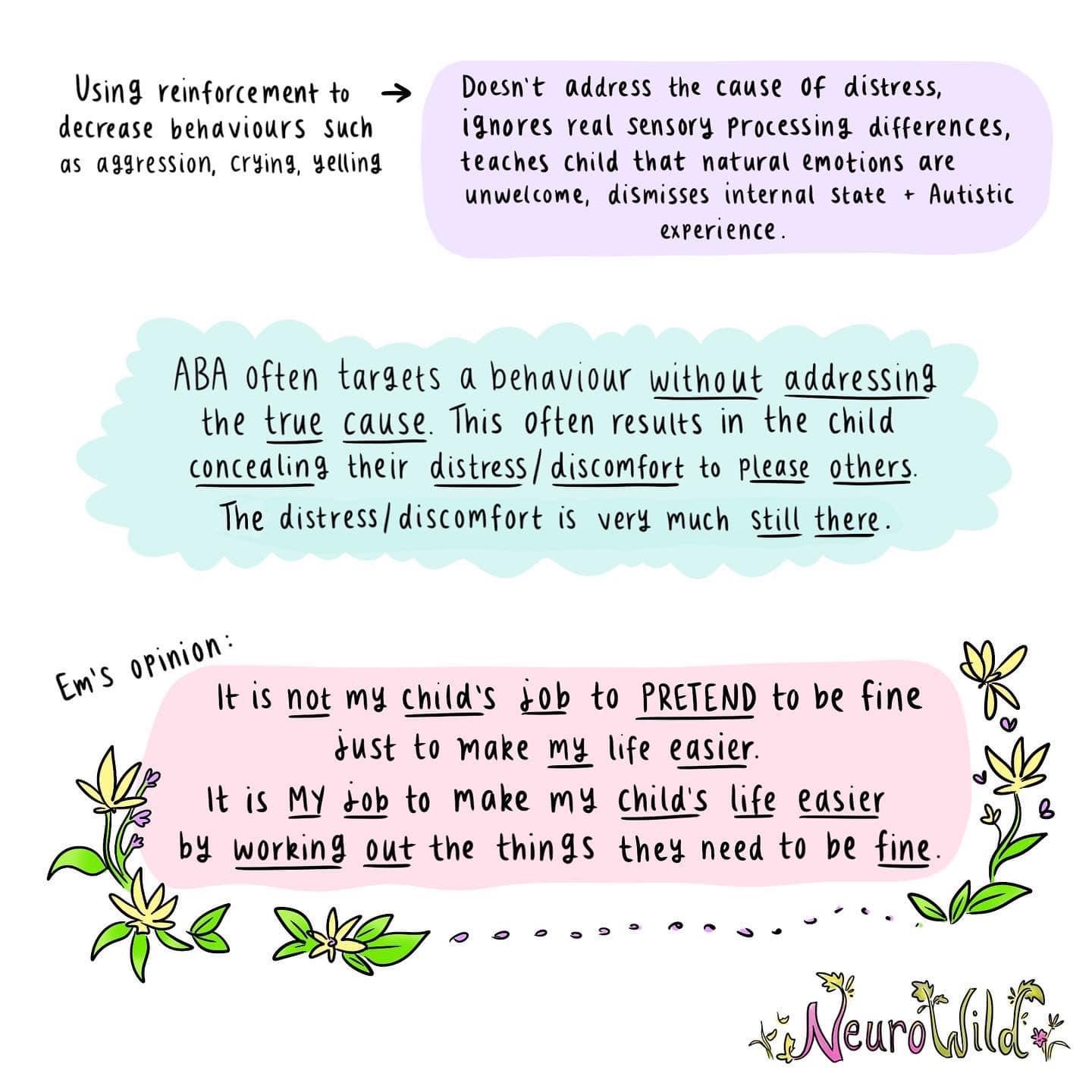
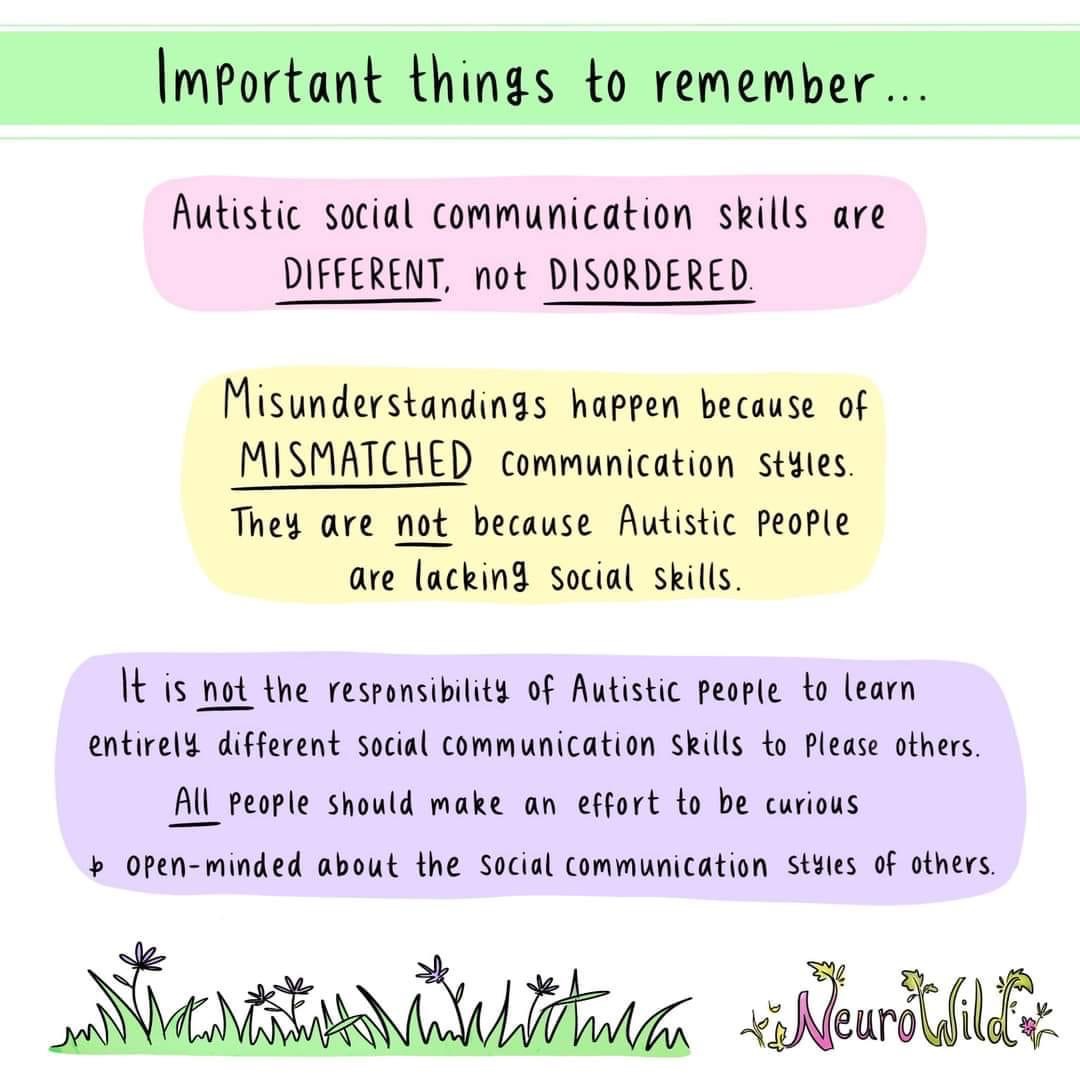
The takeaway is that therapy adapted to support the challenges of Autistic people should not include learning neurotypical social skills.
ABA Mutations
The field of psychology continues to create “new” versions of ABA.
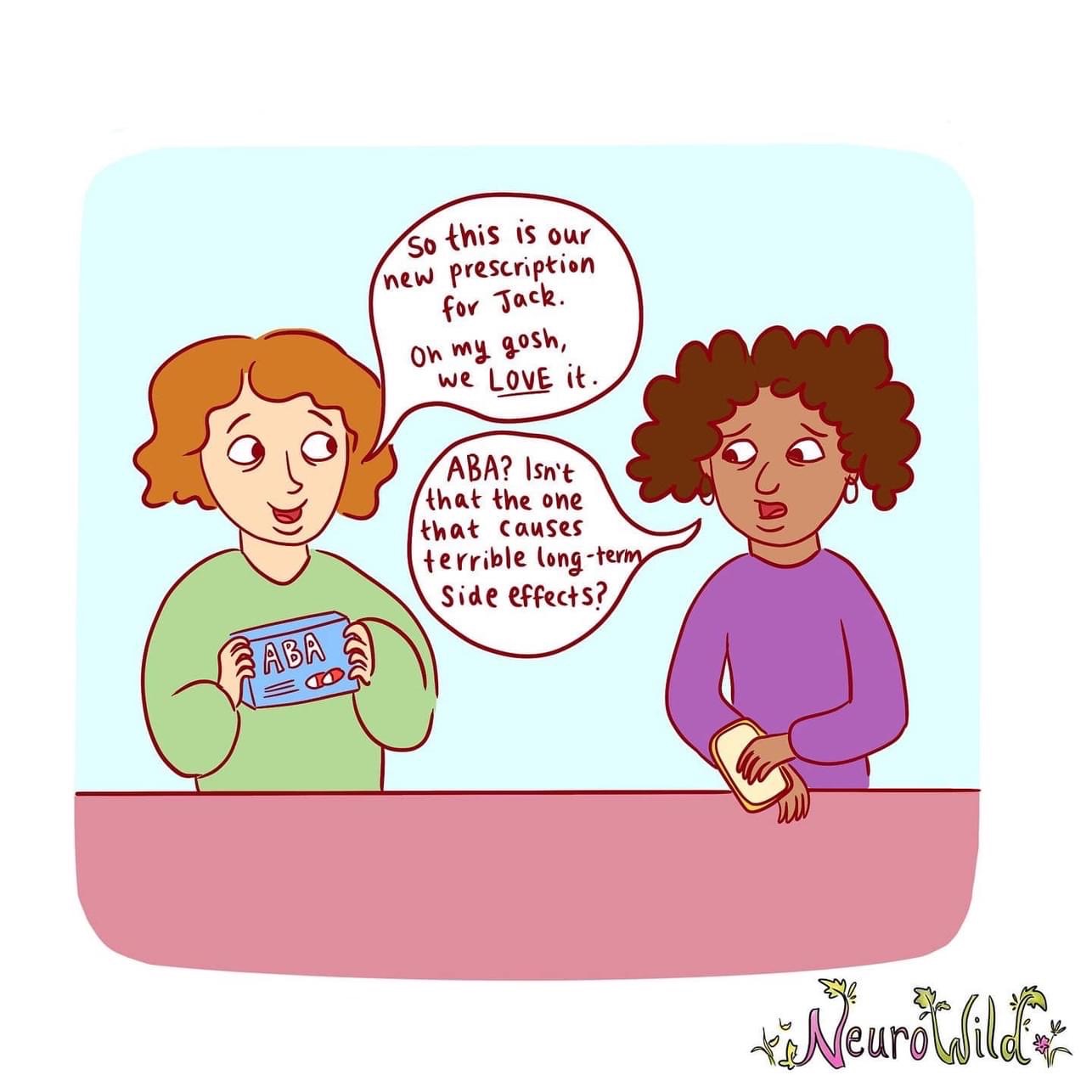
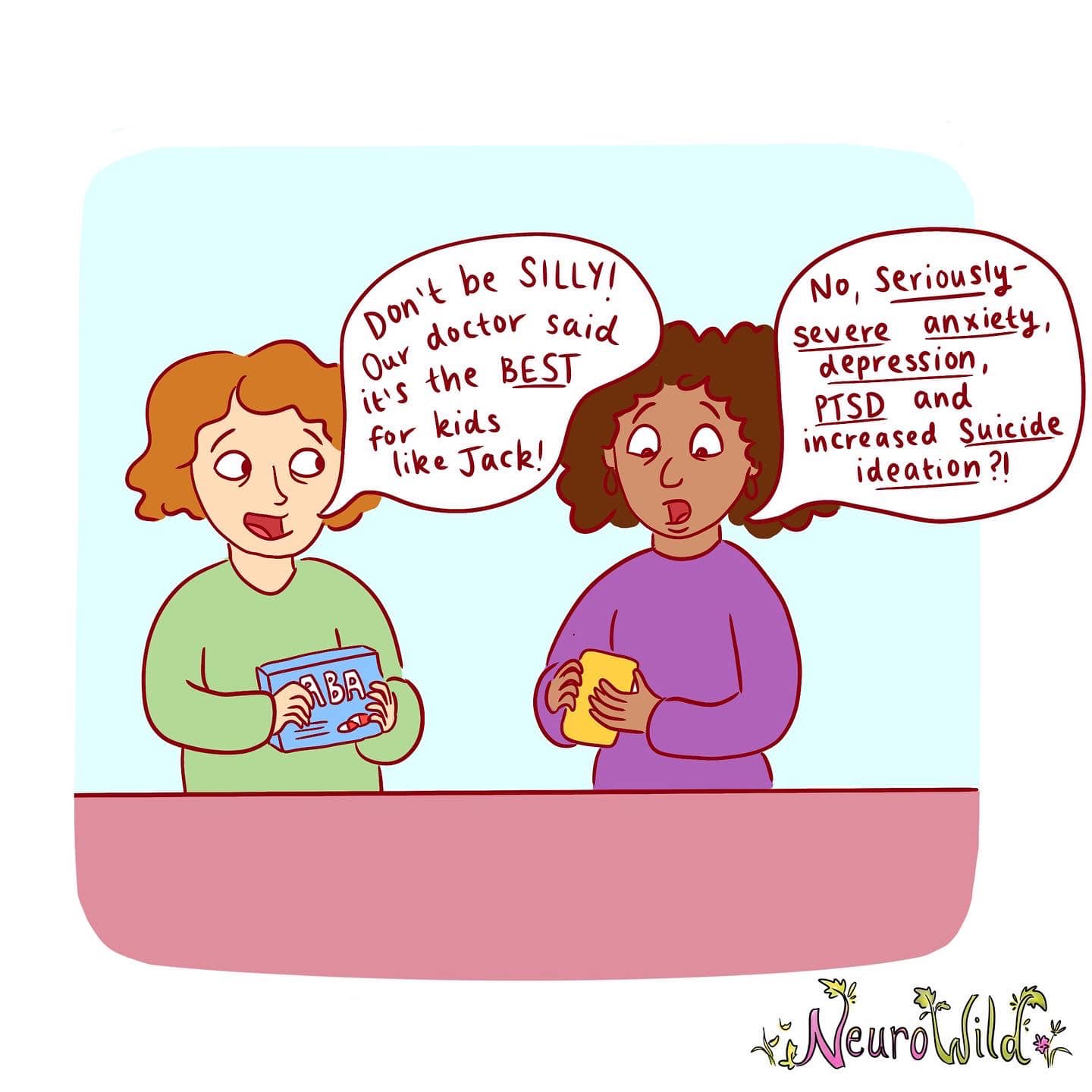
Unfortunately many of the recent innovations in mainstream support for Autistic folk are simply ABA being repackaged. The fundamental emphasis on having the Autistic person taking responsibility for masking remains ever-present.
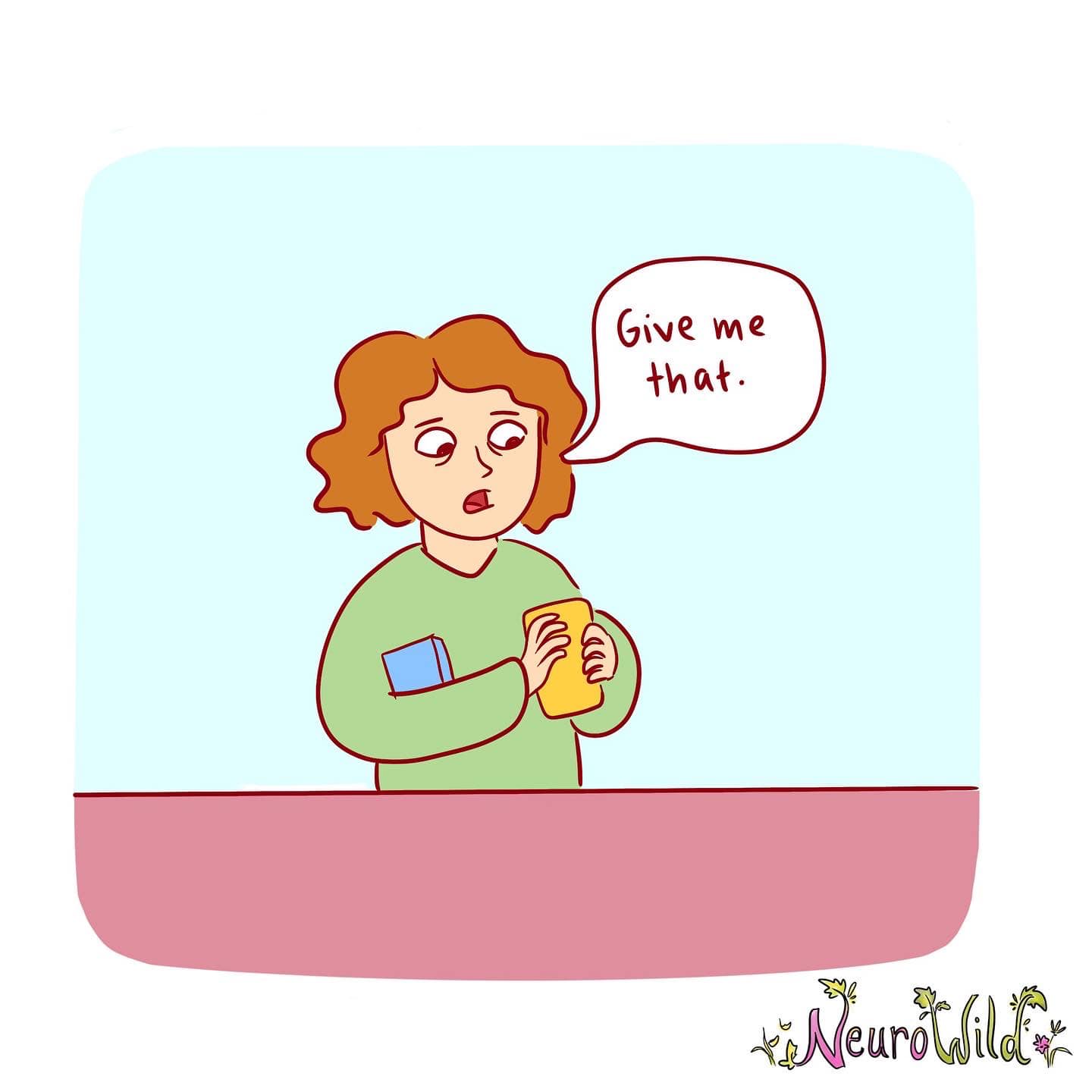
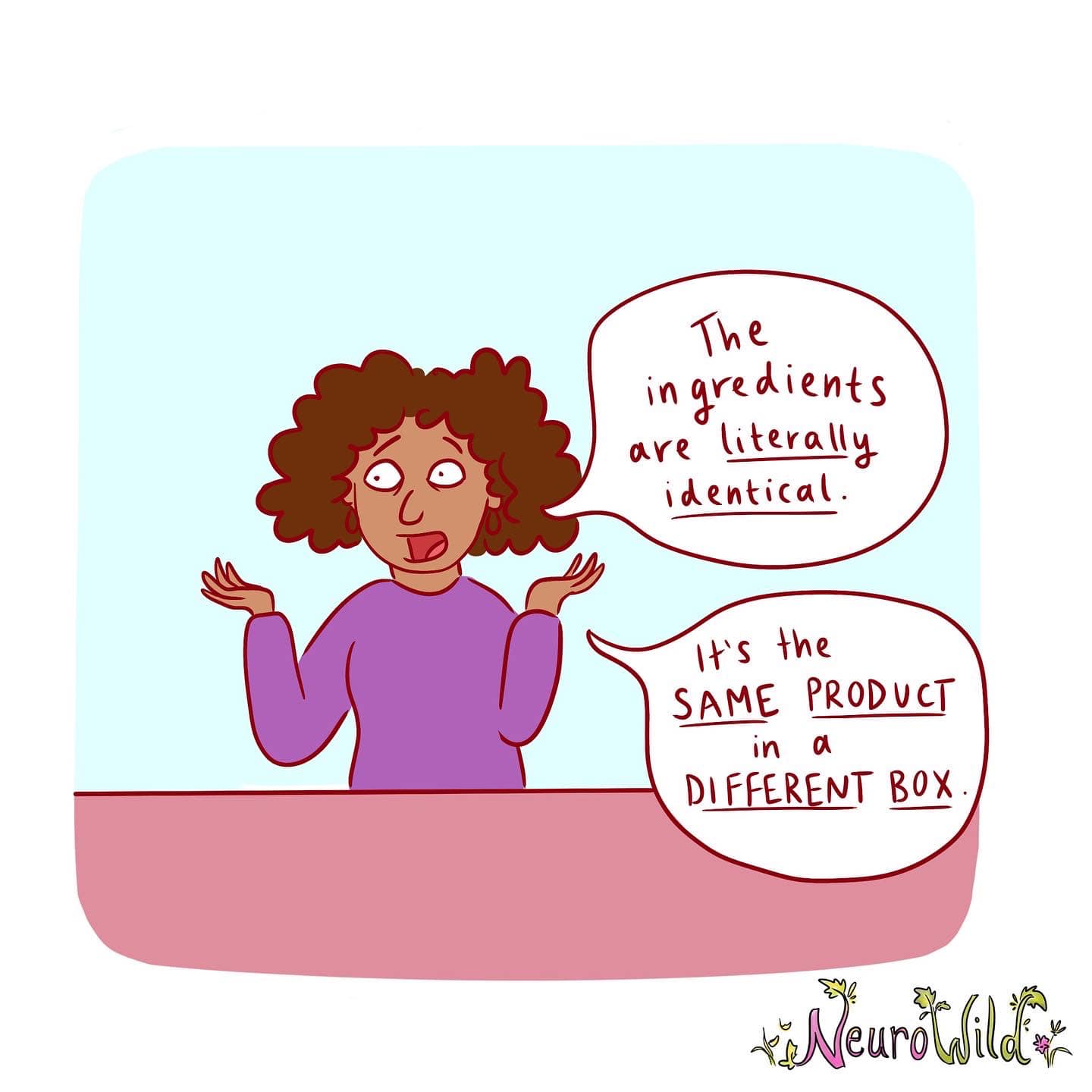
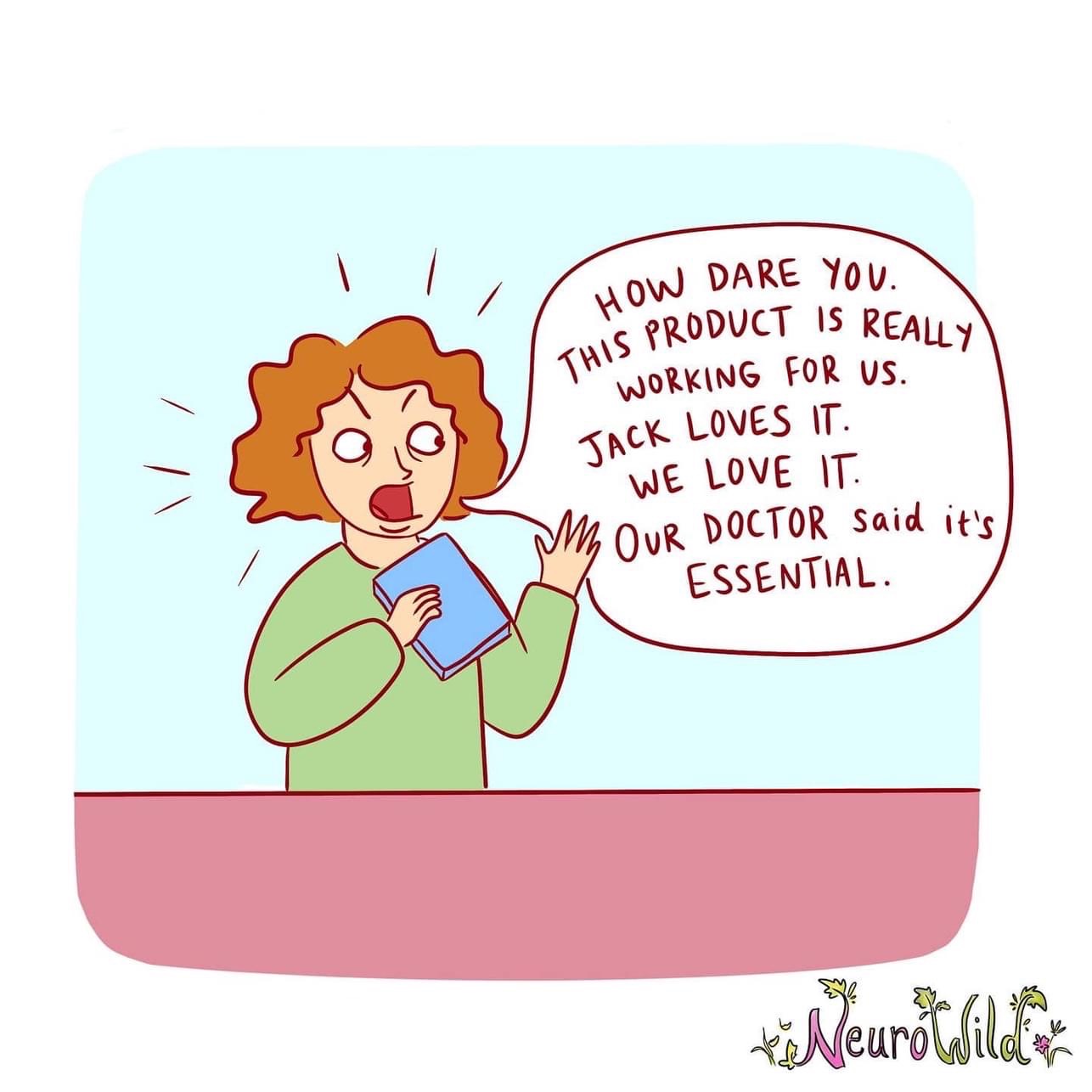
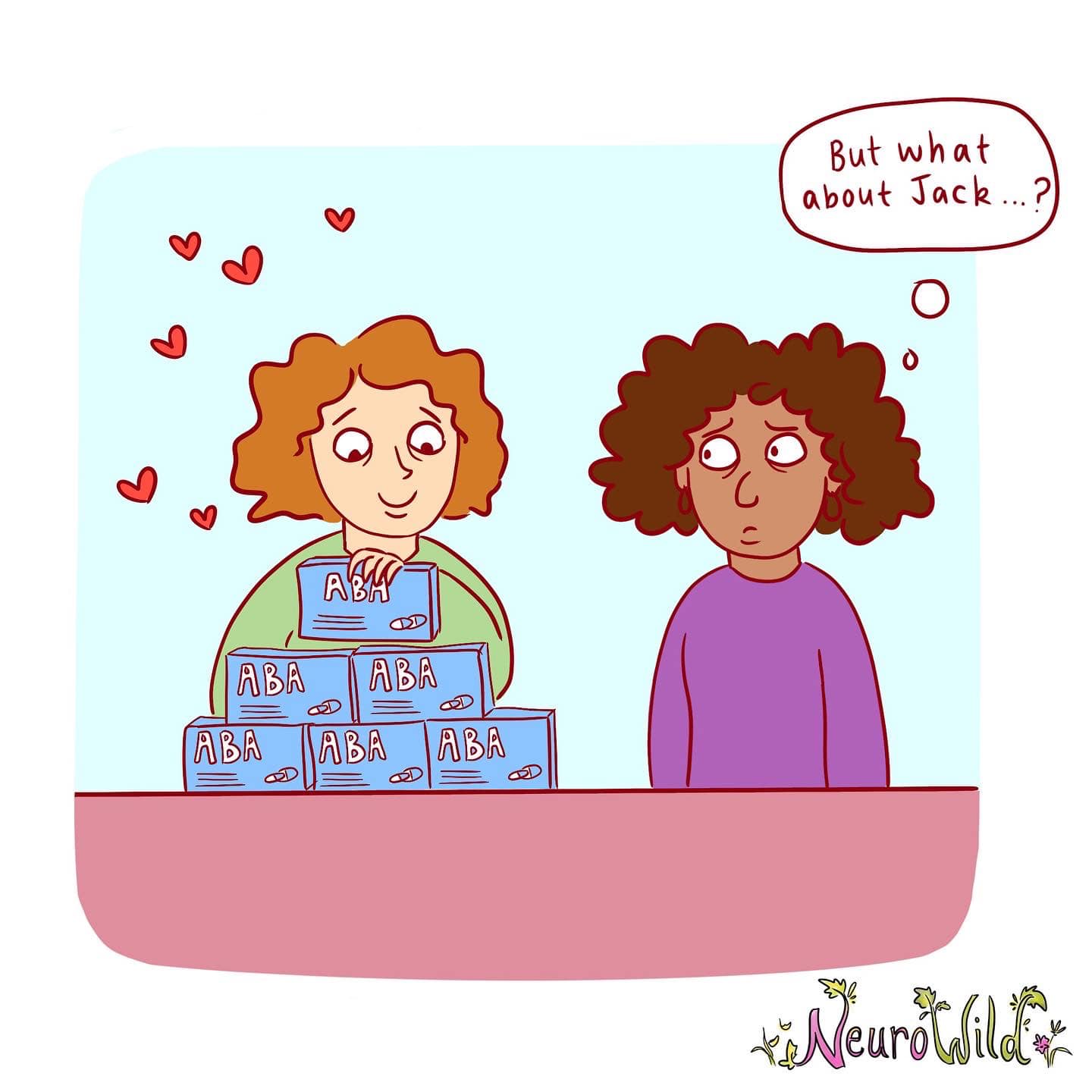
ABA: TLDR
We cannot change how research is done until we understand as a society that Autism and Autistic traits at a fundamental level need to be accepted in our daily lives. It means changing our standards for what is normal so that everyone can be loved, included, and have the opportunity to participate in society.