Office Conflicts & Politics
Workplace politics are not inherently bad. It covers the informal, unwritten system of power, influence, and social navigation that exists in every organization. For neurodivergent people, who often struggle with implicit social rules, this invisible rulebook can be overwhelming and often deliberately exclusionary (Bouckley 2022).
The core reality: Politics are everywhere. They operate through subtle signals: tone of voice, facial expressions, timing, alliances, and unspoken hierarchies. These are neurotypical social conventions that neurodivergent brains may not process naturally. Most resources available to neurodivergent folks do not have practical and accessible guides to navigate these environmental realities
(Garcia 2022; Price 2022; Higashida 2013; Williams 1993).
ND Upgrade intends to start changing that. We don’t have any opinions about workplace politics. We do not dispute the ethics of the subconscious behaviour under neurotypical decisions. We just want neurodivergent people to have the option to access these tools if they wish to learn them.
I. The Basics
Politics in Neurotypical Environments
Map the Political Landscape in your organization or community:
- The informal and informal power dynamics.
- Key players, alliances, and potential conflicts.
One way to do this is through Social Network Analysis (SNA). We recommend starting with the introduction to SNA provided by Visible Network Labs to balance your positioning with strategic conflict avoidance (Visible Network Labs 2026).
Cultivate relationships with people across different levels and departments. Networking is crucial in politics. Building trust and rapport with others can help you gain support and access valuable information.
Communication Skills:
Develop strong communication skills, including active listening, persuasion, and negotiation. Be clear and concise in your messages and adapt your communication style to different audiences.
Emotional Intelligence:
Understand and manage your emotions effectively, and be aware of others’ emotions. This can help you navigate sensitive situations and build strong relationships. Part of this could mean exposing yourself to media that you would not normally consume.
Strategic Thinking:
Think strategically about your goals and how to achieve them within the political context. Consider the potential consequences of your actions and anticipate the reactions of others.
Cognitive Flexibility and Adaptability:
Be flexible and willing to adapt to changing circumstances. Politics can be unpredictable, so it’s important to be able to pivot when necessary. Expand your toolset for addressing challenges in multiple ways so that you can produce results, regardless of the factors which govern the decision making behind those around you.
When you have a goal in mind:
Assess the values, personality, and mindset of the people with the authority to grant that change.
Take a look at different strategies which would produce the outcome you desire, what you’re willing to contribute to make it happen, and take stock of the possible consequences that comes with each approach. Remember that doing nothing is a strategy too.
Play your best response, even when the choices you have available to you range from bad to worst.
Ethical Considerations:
Maintaining neurotypical ethical standards in your interactions with others is one option, as is building a reputation for neurotypical integrity and trustworthiness reinforces your political effectiveness in the long run.
As a neurodivergent individual, it’s crucial to recognize the inclination to elevate ethical conduct to unsustainable levels. Overprioritizing ethics may result in challenges discerning conflicts, prioritizing them, and effectively navigating the environment.
- Neurodivergent individuals are disproportionately more susceptible to moral injury.
- A neurodivergent person may view certain actions as problematic, violent built on strategic ignorance, moral relativism, and sugar-coating
- Others may find the neurodivergent reaction as “inflexible” worldviews and struggling with “black and white thinking”.
We do not judge either neurotype for their moral perspectives. We also believe it is essential for neurominorities to understand these differences and to develop strategies that balance the risk of exposure to moral injury with the fear of experiencing moral injury (Specialisterne 2026).
Stay Informed:
Environmental Cues Keep yourself informed about relevant issues, developments, and trends. Knowledge is power in politics, so staying up-to-date can give you a competitive edge. Notice differences in personalities and values that guide how others respond. Learn to distinguish the difference between isolated incidents and behavioural patterns.
Compensating Tools Stay on top of technologies, frameworks, books, and training webinars that can be retrofitted to make compensating on this easier.
Find Mentors friends or trusted advisors who can offer guidance and support as you navigate political situations. You need to find someone who complements you, not someone you necessarily relate to. Learn from their experiences, and seek their input when facing challenges.
Practice Patience and Perseverance:
Navigating politics can be challenging and sometimes frustrating. Practice patience and perseverance, and don’t be discouraged by setbacks. Keep focused on your goals and continue to learn and grow from your experiences.
📚 Foundational: “Mandatory” Readings
By focusing on these areas and continuously honing your skills through these resources, you can become more adept at navigating politics and achieving your objectives effectively.
If this were a course you signed up for, this would be the required reading:
The 48 Laws of Power and The Laws of Human Nature by Chris Greene

Greene’s insight are a foundational guide to understanding, perhaps even mastering, certain aspects of power dynamics by introducing historical examples and strategic principles.
Adopting the psychological insights into human behaviour 48 Laws of Power by literal and interpretation might conflict with your moral values… It may even misrepresent the many ways power operates in social environments.
Reading this can still be valuable for several reasons:
Awareness & Defense – Understanding the strategies others might use —- whether ethical or not—helps you recognize manipulation, office politics, and some versions of power dynamics before they impact you.
Strategic Thinking – Even if you choose not to apply its principles, the book gives one publicly available approach to think critically, anticipate challenges, and navigate complex social environments.
Adaptability – Success comes in many forms, and exposure to different perspectives broadens your ability to engage with a wide range of people, from corporate leaders to competitive peers.
Confidence & Boundaries – Knowing one approach to obtaining power, often which has been used historically to oppress and control marginalized groups can initiate processes for individuals to build healthy responses and alternatives.
Unlearning Trauma - Everyone has a bad side. For those who are predisposed to aspects of its approach subconsciously, whether as a survival mechanism or from how someone was raised, this book can also help individuals identify and unlearn unwanted behaviours.
No.
You could argue Michelle Obama’s book The Light We Carry is the go-to book to help marginalized groups understand power (Obama 2022; Mendoza 2023). [NPR’s show on Power Aversion could be your basis (Berne 2015). The book’s name is just that – a name.
Ultimately, reading Greene’s book does not mean adopting its philosophy, it just means equipping yourself with knowledge to make informed choices about how some people conceptualize and obtain certain facets of power, whether they are choosing to act like this or not.
The Art of War (孫子兵法) by Master Sun Tzu
The Art of War is a timeless military treatise from 5th century China which provides strategic principles for warfare, leadership, and competition. It focuses on intelligence, adaptability, deception, and psychological tactics to achieve victory, while also minimizing conflict.
Though originally written for military use, its insights are both widely read, making it relevant, and are widely applied across business, politics, and for navigating workplace politics today. The original text consists of thirteen brief chapters, but like many classic works (e.g., the Bible), modern editions are often supplemented with extensive analysis and interpretation. For these reasons, the quality of the edition depends on both the translation and use case analysis.
What Got You Here Won’t Get You There by Marshall Goldsmith and Mark Reiter
This book is foundational for reputation management. It argues that career advancement is often constrained not by competence, but by subtle interpersonal “transactional” hiccups that accumulate reputational cost at higher levels of responsibility.
In high-stakes interactions, it argues that advancement often demands focusing on reducing unintentional friction in the way someone:
- Asserts authority
- Contributes ideas
- Responds to others
Its value is in showing that one’s professional reputation in neurotypical environments is shaped by patterns of relational impact rather than intent or technical output and provides tools on how to make practical changes (Goldsmith and Reiter 2007).
Chris Voss
A former FBI hostage negotiator, entrepreneur, and author known for his expertise in negotiation tactics. He served as the FBI’s lead international kidnapping negotiator and later founded The Black Swan Group, a consulting firm that teaches negotiation strategies for business and personal success.
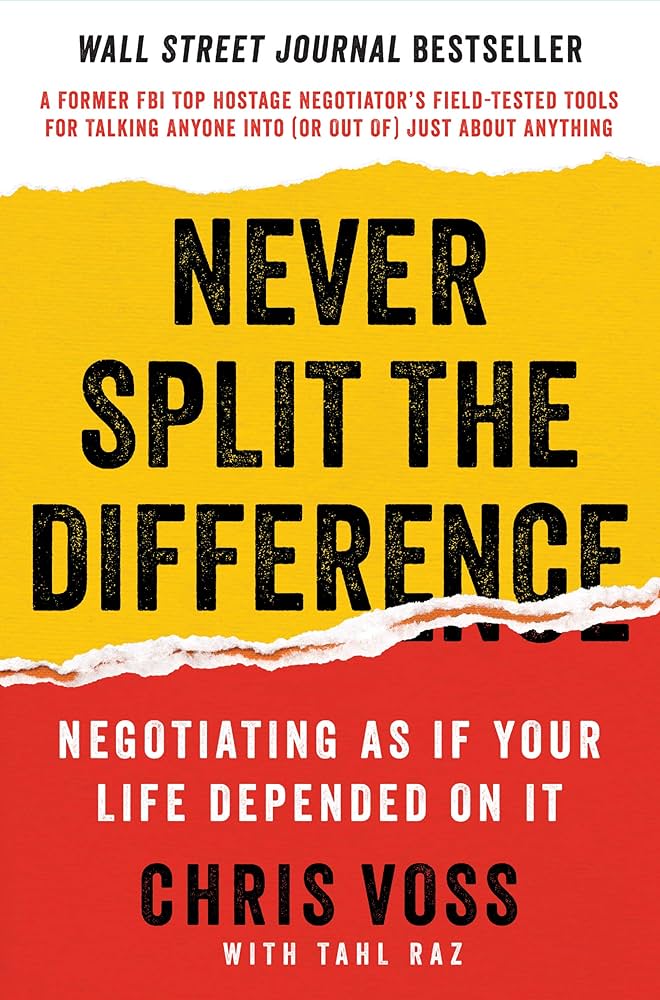
Voss is best known for his book Never Split the Difference: Negotiating As If Your Life Depended On It, where he shares practical techniques drawn from his experience in high-stakes negotiations. If you prefer audio, you can listen to his perspective on YouTube here.
His approach emphasizes emotional intelligence (aka “tactical empathy”) and psychological principles to achieve better outcomes in negotiations. His advice and insights on human behaviour can be used ethically to communicate more effectively and spot deception, but it can also be used to control others. In his case, hostages.
Be mindful with how you apply his insights into human cognition and whether you start relying on his tips for masking your neurodivergence, as masking often comes with significant adverse health effects for neurodivergent folks.
The Secret Language of Work by Erin McGoff
McGoff argues that career advancement is less about raw performance and more about fluency in the unwritten rules of workplace communication. Specifically, knowing how to say the right thing, in the right way, at the right time.
It’s useful because it reframes success as strategic communication and visibility, not just competence. By showing how subtle phrasing choices she describes how you can change how others perceive your value, authority, and professionalism in real time.
Its core contribution is highly practical: It provides explicit, word-for-word scripts for high-stakes situations (interviews, negotiation, boundary-setting, self-advocacy), turning implicit social expectations into repeatable language patterns (McGoff 2024).
The Games People Play by Eric Berne
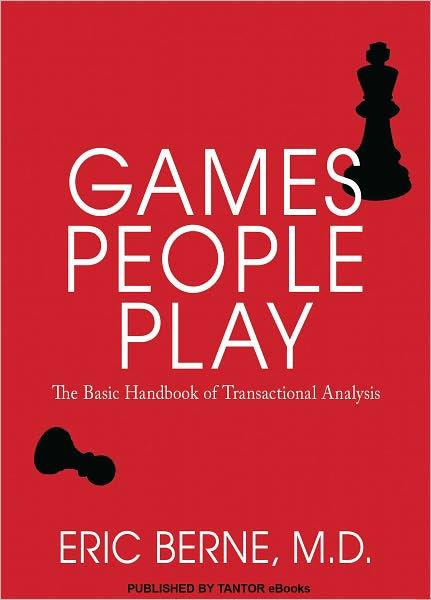
Written by psychiatrist Dr.Eric Berne, this classic introduces Transactional Analysis, a framework for understanding recurring social interactions structured around unspoken roles and psychological payoffs.
Berne argues that many workplace conflicts are not driven by disagreement over facts or performance, but by predictable interactional “games” people unconsciously replay to maintain status, identity, or emotional equilibrium.
The model describes three mental states: Parent, Adult, and Child from which people communicate. Dysfunction emerges when organizations normalize Parent–Child dynamics while claiming to value Adult–Adult collaboration.
Reading Berne is useful for several reasons:
- Pattern Recognition – Helps identify repetitive conflict structures that persist regardless of who occupies the role.
- Power Awareness – Clarifies how authority and compliance are enforced through interactive positioning rather than formal rules.
- Boundary Formation – Makes it easier to recognize when participation is being implicitly demanded rather than explicitly agreed to.
- Risk Assessment – Highlights when continued engagement is likely to escalate rather than resolve conflict.
- Non-Cynical Analysis – Provides a descriptive alternative to power manuals that frame domination as competence.
Once you are trained in identifying these dynamics, be aware that you will likely start to see these games show up not only in your more antagonistic relationships but also in people closest to you. Games are everywhere because they emerge from our subconscious, which is why it is important to understand and learn how to navigate them skillfully.
Like 48 Laws of Power identified below, this book can be misused to rationalize manipulation. Its primary value, however, lies in diagnosis rather than prescription. Understanding a game does not obligate you to play it; this allows you to read the social mechanics at play so you can make informed choices about engagement, disengagement, or exit.
Optional: Further Education
Neurotypical Etiquette Manuals
For centuries the West has relied on etiquette training as a class signalling mechanism. Finding what these books have in common over the past 5+ centuries of human history can be instructive for understanding the hidden curriculum of workplace interactions. Some families, including those in parts of Latin America, still invest in these today as an investment in potential for social mobility
Miss Manners’ Guide to Excruciatingly Correct Behavior by Judith Martin
Sharp, more modern etiquette framed around social violation repair (Martin 2011).
- Core Idea: Etiquette is conflict avoidance infrastructure.
- Relevant For: handling awkward interactions, recovering from missteps without requiring escalation, and indirect boundary-setting.
Emily Post’s Etiquette by Emily Post
Codifies social behavior in formal and semi-formal contexts with a 1922 version and a more modern version for 2022 (Post 1922; Post and Post Senning 2022).
- Core Idea: Reduce friction through predictability and tact.
- Relevant For: Workplace professionalism norms, tone calibration, and identifying what “appropriate distance” means for different interactions.
The Art of Worldly Wisdom (1647) by Baltasar Gracián y Morales
An older guide to social strategy and perception management using concise, witty, and memorable statements. Originally written in Spain by a Jesuit priest in 1647, it has more standard English translations published after 1892 (Gracián 1892, 1647).
- Core Principle: Say less than you know, and allow others to infer competence.
- Relevant For: Reputation management, strategic ambiguity, limiting exposure and intentions
The Book of the Courtier (1528) by Baldassarre Castiglione
Early manual of elite social performance (“sprezzatura” meaning effortless competence) (Castiglione 1528).
- Core Principle: Excellence should appear effortless to others.
- Relevant For: Seeming natural while being highly controlled, avoiding making social performance look easy, and managing authority without aggression
Indirect/Female Aggression and Bullying
Healthy Gamer (aka Dr.K) is a BIPOC and Neurodivergent Harvard Psychiatrist with some tips on spotting and navigating aggression that we tend to observe in women:
Cognition
- Processing speed
- Attention
- Working memory
→ (Sweller, Hutchins)
Interaction
- Timing
- Turn-taking
- Repair
→ (Goffman, Sacks, CA)
Moral & Political
- Respectability
- Epistemic injustice
- Power interpretation
→ (Fricker, Crenshaw, Haidt)
| Concept | Field | Lead contributors | Key resources / anchors | What it explains (in your frame) |
|---|---|---|---|---|
| Reputation management through micro-behaviors | Organizational behavior | Marshall Goldsmith | What Got You Here Won’t Get You There | How small interaction habits accumulate into reputational outcomes |
| Cognitive limits & executive function constraints | Psychology / neurodiversity research | Peg Dawson | Smart but Scattered | Why performance depends on external scaffolding, not willpower |
| Implicit social rules / interaction order | Sociology | Erving Goffman | Interaction Ritual, Presentation of Self | How “unwritten rules” govern behavior in real-time interaction |
| Turn-by-turn conversation mechanics | Conversation Analysis | Harvey Sacks | Conversation analysis literature | How timing, turn-taking, and repair structure social acceptance |
| Politeness / face-saving systems | Linguistics | Penelope Brown / Stephen C. Levinson | Politeness Theory | Why directness, correction, and meta-communication trigger resistance |
| Signaling under uncertainty | Economics | Michael Spence | Signaling theory | Why style often outweighs content in perceived competence |
| Status assignment in groups | Sociology | Cecilia Ridgeway | Status Characteristics Theory | How competence attribution is socially pre-filtered |
| Trust as social infrastructure | Political science | Dietlind Stolle | Social capital literature | How baseline trust changes interpretation and flexibility |
| Generalized trust & cooperation systems | Sociology / political science | Robert Putnam | Bowling Alone | How cooperation depends on network density and norms |
| Psychological safety (error tolerance) | Organizational behavior | Amy Edmondson | Psychological safety research | Why environments differ in tolerance for mistakes and ambiguity |
| Moral intuition shaping judgment | Moral psychology | Jonathan Haidt | Moral Foundations Theory | Why moral reactions precede rational explanation |
| Virtue ethics (character formation) | Philosophy | Aristotle | Nicomachean Ethics | How stable traits shape long-term perception |
| Discourse ethics (legitimacy of communication) | Philosophy | Jürgen Habermas | Communicative action theory | Why some voices are granted legitimacy in dialogue |
| Care ethics (relational morality) | Feminist philosophy | Carol Gilligan | In a Different Voice | Why moral evaluation depends on relational context |
| Epistemic injustice (credibility bias) | Feminist epistemology | Miranda Fricker | Epistemic injustice theory | Why some speakers are not believed regardless of accuracy |
| Power aversion (perceived dominance threat) | Sociology / org behavior | (cross-field construct) | Workplace communication literature | Why clarity, correction, or structure can be misread as control |
| Respectability politics (norm compliance pressure) | Critical theory | Kimberlé Crenshaw | Intersectionality | Why marginalized groups are judged on “fit” not function |
| Legibility (cultural readability of identity) | Queer theory / anthropology | Judith Butler | Gender Trouble | Why behavior must fit existing categories to be understood |
| Class-coded communication (habitus) | Sociology | Pierre Bourdieu | Distinction | Why tone, restraint, and phrasing signal social position |
| Implicit cultural rules (tacit knowledge) | Anthropology / org theory | Mary Douglas | Cultural theory | Why rules are learned through participation, not instruction |
| High-context communication systems | Cross-cultural communication | Edward Hall | Beyond Culture | Why meaning is carried in context more than explicit speech |
| British communication legibility system | Sociolinguistics / cultural theory | (multi-field synthesis) | UK sociolinguistics, etiquette literature | Why understatement, restraint, and class indexing govern interpretation |
| Cognitive load constraints in interaction | Cognitive psychology | John Sweller | Cognitive load theory | Why processing speed affects social performance |
| Distributed cognition in interaction | Cognitive science | Edwin Hutchins | Cognition in the Wild | Why thinking is shared across people, not purely internal |
| Pragmatics (implied meaning) | Linguistics | H. Paul Grice | Conversational implicature | Why people infer meaning beyond literal words |
| Reputation path dependence | Sociology / econ | (cross-field) | Reputation systems literature | Why early impressions shape long-term interpretation |
Business
The business literature can contextualize how and why interpretations can change outcomes materially in professional contexts (career outcomes, access, and credibility). It opens discussions on how behavior gets judged and rewarded by modelling how organizations convert interactions into reputation, promotion, or exclusion.
Governs:
- Psychological Safety - Error tolerance
- Cultural norms - “How things are done”
- Gaps in Performance vs Perception
- Reputation Management The long run accumulation
| Concept | Field | Lead contributors | Key resources | What it explains |
|---|---|---|---|---|
| Organizational culture (implicit norms inside firms) | Organizational behavior | Edgar Schein | Organizational Culture and Leadership | How “the way things are done here” is learned implicitly, not stated |
| Impression management in workplaces | Organizational psychology | Erving Goffman | The Presentation of Self in Everyday Life | How employees shape perception strategically in hierarchical systems |
| Signaling competence in hiring/promotion | Economics / HR | Michael Spence | Job market signaling theory | Why style, credentials, and confidence outweigh raw ability in evaluation |
| Hidden curriculum of professionalism | Management / sociology | (multiple authors) | Corporate training literature | How “professionalism” is implicitly taught via observation, not instruction |
| Psychological safety in teams | Org behavior | Amy Edmondson | Psychological safety research | Why some workplaces tolerate ambiguity, mistakes, and voice—others don’t |
| Power dynamics in organizations | Org sociology | Rosabeth Moss Kanter | Men and Women of the Corporation | How informal power structures shape behavior more than formal roles |
Linguistics
Linguistics literature can be useful for explaining why the same sentence can produce different interpretations depending on context, tone, and identity. It can give a formal system for how people go from words to inferred meaning.
Governs:
- Implicature - “What you really meant”
- Politeness - Face threat mitigation
- Indirectness - How disagreement is encoded
- Indexicality - What your speech signals about identity and status
| Concept | Field | Lead contributors | Key resources | What it explains |
|---|---|---|---|---|
| Pragmatics (implied meaning) | Linguistics | H. Paul Grice | Cooperative Principle | Why meaning ≠ literal words (implicature, inference, tone) |
| Speech acts (what words do) | Linguistics / philosophy | J.L. Austin | How to Do Things with Words | Why saying something is an action (promise, order, refusal, etc.) |
| Conversational implicature | Linguistics | Grice | Pragmatics literature | How people “read between the lines” systematically |
| Politeness theory (face management) | Linguistics | Penelope Brown / Stephen C. Levinson | Politeness: Some Universals in Language Usage | Why indirectness protects social “face” |
| Interactional sociolinguistics | Linguistics | John Gumperz | Cross-cultural discourse studies | Why miscommunication happens via tone/context mismatch |
| Indexicality (social meaning of language) | Sociolinguistics | Michael Silverstein | Language ideology work | How speech signals class, identity, authority beyond content |
| Discourse analysis (power in language) | Linguistics | Norman Fairclough | Critical Discourse Analysis | How institutions embed power in wording and framing |
Intersection: “Applied Interaction Systems”
An interdisciplinary field combining business and linguistics, it explains how behavior is produced in real time.
- Turn-taking timing
- Interruption norms
- Repair sequences
- Face-work in real time
| Concept | Field | Lead contributors | Key resources | What it explains |
|---|---|---|---|---|
| Interaction order (real-time social structure) | Sociology | Erving Goffman | Interaction Order essays | How face-to-face interaction has its own rules independent of institutions |
| Turn-taking system design | Conversation analysis | Harvey Sacks | CA literature | How timing, overlap, and pause are structured socially |
| Repair mechanisms (fixing misunderstandings) | Conversation analysis | Sacks / Schegloff | Repair sequence research | How people recover from miscommunication without losing status |
| Legibility in institutional communication | Public administration / sociology | James C. Scott | Seeing Like a State | Why systems simplify people into readable categories |
| Professional communication “scripts” | Applied linguistics / HR | corporate training literature | workplace playbooks | Predefined language patterns for high-stakes situations |
Living With Sharks and Snakes
Understanding “assertive” and “strategic” colleagues in the workplace is essential for navigating professional dynamics effectively. Some individuals prioritize competition and personal advancement, while others may use subtle influence to achieve their goals.
Recognizing these behaviors allows you to set boundaries, communicate strategically, and foster positive working relationships. It also helps in managing workplace politics, resolving conflicts, and maintaining your professional integrity while ensuring your contributions are recognized and valued, something which marginalized people disproportionately struggle with.
Real sharks (the fish 🦈) and snakes (the reptile 🐍) in the wild are mostly harmless and perhaps even fearful of humans unless they are desperate for food or otherwise provoked. If anything, it is other humans we may seek to be more weary of.
Change Your Media Exposure
Understanding “Anti-Collaborative” People Read self-help books that would resonate with the people you struggle to work with most. Learning about people and value systems you disagree with is an important part of sharing a world with others.
Watch well-written shows featuring neurotypical politics
- Identify what their strengths are
- Try to learn from them, even if it’s not your cup of tea.
Other well-written shows with socially adept and well-regulated characters (sometimes to a fault), who are able to assert their individuality while acting in their best interests are:
Regardless of what you use it for, these shows do teach you how to become better at judging character while learning to act in your best interest, even in cases where the deck is stacked against you.
Suits
Suits is a legal drama (2011–2019) about Mike Ross, a brilliant college dropout who lands a job at a top New York law firm despite never attending law school. He works under Harvey Specter, a sharp and charismatic lawyer.
Known for its wit and stylish portrayal of corporate law, the show follows high-stakes cases, office politics, and relationships in a competitive workplace environment.
Louis:
- His Problem: Emotional dysregulation and impulsive reputation.
- Underlying Lesson: He works more than anyone, most technically inclined as a lawyer, and brings in more money than any other employee, but his character is designed to be disrespected. Can you tell why?
Harvey:
- Teaches viewers: How to spot deceit, red flags, and adapt your expectations of what you can get from a situation based on the personalities involved. Pay attention to the advice he gives his mentees throughout the show; these are intentionally added into the show’s dialogue for viewers.
- Notice: His positive reputation and influence are not impacted by his insufferable personality, how little money he brings in, or the fact that he’s not even a partner. So why do people respect him in this work culture?
Jessica: An important character of colour in a male-dominated field.
- Teaches viewers: How to defend yourself when you’re an “only” in a field like law and finance, how you can affect change and lift other marginalized groups up without losing yourself in the process, when and how you’re allowed to lash out and express yourself as an “only”.
- Relate: When you’re an “only” you’re not usually allowed to express rage or have honest conversations about privilege. What makes Jessica different and relatable on screen? Writers give her grace in writing scenes where she responds to her subordinates’ sense of entitlement and privilege, how she defends, herself, the risks she criticizes, and the comments she makes about Louis and Harvey, as well as why.
🚩 What We Don’t Want
Many studies document underpinning the movement for supported employment demonstrate that neurodivergents are more productive than neurotypical counterparts. Some individuals argue that we’re more productive because we burn ourselves out overcompensating to fit in. Others argue that our unique abilities allow us to excel as specialists in our area, compared to neurotypicals, offering strengths as generalists (Bouckley 2022).
It is possible that the answer depends on context and can be explained by a combination of both. Nevertheless, neurodivergent people are disproportionately likely to be targeted in a workplace environment. Be on the lookout for these general red flags:
- Micromanagement
- Constantly monitoring your every move, excessively checking your work, and providing unnecessary scrutiny can be a sign of a manager trying to create a stressful environment.
- Isolation
- Excluding you from important meetings, decision-making processes, or team activities can be a way to make you feel isolated and undervalued and signalling that message to others in the workplace.
- Unreasonable Expectations/Changing Goalposts
- Setting unattainable goals or constantly raising performance standards without providing the necessary resources or support is a classic tactic to set you up for failure.
- Inconsistent Feedback
- Providing inconsistent or unclear feedback, making it difficult for you to understand expectations or improve your performance.
- Public Shaming
- Criticizing your work or performance in public or in front of colleagues and customers, particularly when de-emphasizing or omitting constructive feedback entirely.
- Withholding Information
- Keeping you in the dark about important matters or changes that may affect your job can create a sense of insecurity.
- Sabotaging Opportunities
- Deliberately preventing you from taking on new projects or opportunities for growth can be a way to hinder your professional development.
- Undermining Your Efforts
- Discrediting your work, taking credit for your ideas, or spreading rumors can be signs of a toxic manager trying to undermine your credibility.
- They may also take control of the narrative surrounding your work by over-emphasizing your mistakes and treating your adequate or stellar contributions as unrepresentative exceptions.
- Chipping at your self confidence overtime so that your feel less and less comfortable asserting your value added, overemphasize your mistakes when you reflect on your work yourself, and generally start to agree with them.
- You may begin making mistakes you did not start off making because your mind is overly anxious, rather than present, at work. You find yourself unable to stop thinking about work during your days off so you experience a decline in cognitive capacity which affects your ability to do your best.
- DARVO
- Deny: Exploits mixed signals, gray areas, and selectively reinterprets facts through plausible deniability.
- Attack: Accusations that often support strategic context and interests rather than the emotional reality; serves to control the narrative of a situation in the ways that matter so that their experience is the only one that is heard, even if it’s untrue or deeply unrepresentative.
- Reverse Victim and Offender: Claims to be the victim to avoid being held accountable for their predation; a form of gaslighting.
Neurodivergent individuals often question their sense of social situations, so we’re more vulnerable to DARVO. If you ever experience an accusation that feels like a reversal of roles, consider whether you’re experiencing DARVO first before responding.
IV. Responding to Red Flags
Beyond dusting off your resume and avoiding certain individuals at work, you can focus on the strengths of the people you’re working with, develop a strategy that involves better timing while you position yourself (ex: temporarily sticking it out, taking this as an opportunity to develop your reputation as a flexible person). If it’s a classic case of not being respected (doormat), figuring out ways to re-brand when people dump things on you.
Assistive Technology
You’ll also need to keep a spreadsheet documenting your experiences.
- To Rephrase Communications Better: The Formalizer by Goblin.tools. Get a concrete explanation demo here.
- Ask A Manager
- A website dedicated to anything related to management (very general).
- Udemy
- Many use Udemy to learn coding, but it also has a vast repertoire for learning soft skills.
- Check if your university or employer provides free training through Udemy already.
- Find a video which suits your needs, and learn from an expert.
What We Want:
- Empowerment and Trust
- Trusting employees to manage their tasks independently.
- Allowing autonomy and decision-making within their roles.
- Inclusion and Team Collaboration
- Including employees in important meetings and decision-making processes.
- Fostering a collaborative and inclusive team environment.
- Realistic Expectations and Support
- Setting achievable goals with the necessary resources and support.
- Providing clear expectations without setting employees up for failure.
- Consistent and Constructive Feedback
- Offering regular and clear feedback on performance.
- Providing constructive criticism aimed at improvement.
- Private and Constructive Feedback
- Offering feedback in private and focusing on constructive criticism.
- Acknowledging achievements in public.
- Open Communication and Transparency
- Communicating important information openly and transparently.
- Sharing updates and changes that may affect employees.
- Supporting Growth and Development
- Encouraging employees to take on new projects and opportunities.
- Fostering an environment that promotes professional development.
- Recognizing and Valuing Contributions
- Acknowledging and giving credit for employees’ work and ideas.
- Encouraging a positive narrative around employees’ contributions and achievements.
- Promoting a culture of self-confidence and value within the team.
Special Notice
Please note that this webpage is in the process of being rolled out to the public. We apologize for the inconvenience, and relevant sections will be added soon.
This page was assisted, but not authored, by ChatGPT.
Social
→ (Spence, Ridgeway, Bourdieu)